Department of Mathematics
 Search | Help | Login | pdf version | printable version

Math @ Duke


Webpage

Mathematics : Research Interests

Professors

  1. William K Allard, Scientific computing, particularly distributed computing; differential geometry; geometric measure theory; partial differential equations.
  2. Paul S Aspinwall, String Theory
  3. J. Thomas Beale, Partial Differential Equations and Fluid Mechanics
  4. Hubert L. Bray, Geometric Analysis, General Relativity
  5. Robert L Bryant, Nonlinear Partial Differential Equations and Differential Geometry
  6. Richard M Hain, Topology of Algebraic Varieties, Hodge Theory, and Moduli of Curves
  7. John Harer, Computational Topology, Computational Biology, Algorithms
  8. Harold Layton, Mathematical Physiology
  9. William L Pardon, Algebra and Geometry of Varieties
  10. Arlie O Petters,
  11. Michael C Reed, Analysis, Applications of Mathematics to Physiology and Medicine
  12. Leslie D. Saper, Locally symmetric varieties, Automorphic forms,
    L2-cohomology and intersection cohomology, Geometrical analysis of singularities
  13. David G Schaeffer, Applied Mathematics, especially Partial Differential Equations
  14. Chad Schoen, Algebraic Geometry
  15. Mark A Stern, Geometric Analysis,string theory
  16. John Trangenstein, Adaptive mesh refinement, Multigrid preconditioners
  17. Stephanos Venakides, Integrable systems, Wave motion in complex media, Mathematical biology
  18. Xin Zhou, Partial Differential Equations and Integrable Systems

Associate Professors

  1. David Kraines, Algebraic Topology and Game Theory
  2. Jonathan C. Mattingly, Applied mathematics, Probability, Ergodic Theory, Stochastic partial differential equations, Stochastic dynamical systems, Stochastic Numerical methods, Fluids
  3. M. Ronen Plesser, String Theory and Quantum Field Theory
  4. Thomas P Witelski, Fluid Dynamics, Perturbation Methods, Asymptotic Analysis, Nonlinear Ordinary and Partial differential equations

Assistant Professors

  1. Mark Huber, Monte Carlo simulation and stochastic computation
  2. Anita T Layton, Mathematical physiology; Multiscale numerical methods; Numerical methods for global atmospheric models
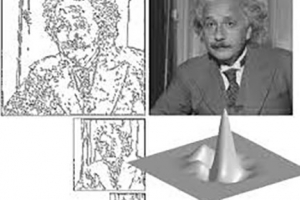
  3. Mauro Maggioni, Harmonic analysis, with applications to statistical analysis of high-dimensional data, machine learning, imaging.
  4. Lenhard L Ng, Symplectic geometry, Low dimensional topology, Contact geometry, Knot theory, Holomorphic curves

Assistant Research Professors

  1. Elizabeth L. Bouzarth, fluid dynamics, numerical analysis, applications of mathematics to biology
  2. Matthias Heymann, computation of transition paths for rare events, application to biology
  3. Shahed Sharif, Arithmetic geometry, number theory

Professors of the Practice of Mathematics

  1. Lewis D Blake, Teaching mathematics
  2. Jack Bookman, Mathematics Education
  3. Clark B Bray, Algebraic Topology

Adjunct Professors

  1. Andrea L Bertozzi, Nonlinear Partial Differential Equations, Applied Mathematics, Thin films, Image Processing, Swarming
  2. Michael Shearer, Partial Differential Equations; Granular Materials; Thin Liquid Films.
  3. Jonathan Wahl, Algebraic Geometry

Professors Emeriti

  1. Richard E Hodel, Set-theoretic Topology, set theory, logic
  2. Joseph Kitchen, Functional Analysis
  3. Lawrence C Moore, Mathematics Education and Functional Analysis

  4. David A Smith, Mathematics Education

Visiting Faculty

  1. Benoit Charbonneau, Gauge theory, more specifically Nahm transforms, Yang-Mills instantons, and their dimensional reductions
  2. Boumediene Hamzi, Applied Dynamical Systems, Control Theory

Graduate Students

  1. Amir Babak Aazami, Gravitational Lensing, General Relativity, Geometry, Singularities
  2. Alex Aguado, Geometric & Differential Topology, Foundations, Graph Theory
  3. Prakash Balachandran, Stochastic Differential Geometry and Infinite Dimensional Random Walks
  4. Matthew M. Bowen, PDEs, Numerical Analysis
  5. Benjamin P Cooke, Genetics
  6. Mihaela K. Froehlich, Rotating thin films
  7. Oliver Gjoneski, Algebraic Geometry, Algebraic Groups, Langlands Program
  8. Michael B. Gratton, Dewetting and coarsening of thin fluid films
  9. Aubrey R. HB, Computational Algebraic Topology
  10. Aaron D. Jackson, Analysis, PDEs
  11. Jeff Jauregui, General Relativity, geometric flows
  12. Michael J. Jenista, I am currently working on the application of the Conley Index to biological dynamics. The Conley Index is a generalization of Morse Theory, and lends itself to computer work. I am employing software developed by Konstantin Mischaikow, Pawel Pilarczyk, Marian Mrozek, and others to study dynamical changes in coupled oscillator networks over various parameter ranges.
  13. Hyeongkwan Kim, algebra, topology, geometry
  14. Tiffany N. Kolba, Stochastic Analysis
  15. M. George Lam, I study curvature in general relativity under Dr Hubert Bray. Recently I have been investigating the question of defining mass in a spacetime. The mass of an entire spacetime have been studied extensively over the past few decades with many fundamentals results, two of which are the Positive Mass Theorem and the Penrose Inequality. On the other hand, the question "How much matter is in a given region of a spacetime?" is still very much an open problem. Various definitions of this so called quasi-local mass have been proposed, but none satisfies all the desirable properties one would expect in such a definition.

    Besides being interesting in their own rights, such quasi-local mass functions have turned out to be important tools in understanding the geometry of spacetime. Husiken and Illamen proved the Riemannian Penrose Inequality for a single black hole via inverse mean curvature flow and the Hakwing mass, and Bray used the conformal mass to prove case with any number of black holes. More recently, Shi and Tam obtained lower bounds for the Brown-York mass and the Bartnik mass for compact three manifolds with smooth boundaries and derived sufficient conditions for the existence of horizons for a certain class of compact manifolds as a consequence. All these lead to the idea that a 'good' definition of quasi-local mass should also provide us with insights into the general structure of spacetime.
  16. Wai J. Law, Applied Math
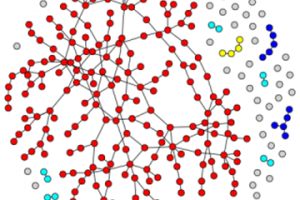
  17. Shishi Z. Luo, Though I originally did my undergraduate degree with the aim to do mathematical modeling in finance, I've since discovered that mathematics also has a multitude of applications in biology. I recently did a project modeling the spread of avian flu on a scale-free network.
  18. Janice M. McCarthy, Mathematical Physics
  19. Anthony J. Narkawicz, Algebraic Topology, Hyperplane Arrangements, Local System Cohomology
  20. Alan R. Parry, Currently I'm interested in Differential Geometry and its applications to Relativity Theory. In the past, I have studied Lie Theory and my master's thesis was on classifying solvable Lie algebras through dimension seven.
  21. Harrison D. Potter, Learning.
  22. Michael D. Pruitt, Analysis
  23. David E. Rose, I am currently interested in homological algebra, algebraic topology, algebraic geometry, and category theory. My research as an undergraduate was in the areas of matrix analysis and operator theory. More specifically, I studied properties of the Aluthge transform and the numerical range.
  24. Arya Roy, String theory
  25. Abraham D. Smith, Differential Geometry, Geometric PDE, Exterior Differential Systems, Mathematics Education
  26. Joseph A. Spivey, Algebraic Topology
  27. Rachel L. Thomas, I'm interested in stochastic differential equations on graphs and the mathematics of biochemical reaction networks.
  28. Andrea C. Watkins, Stochastic Partial Differential Equations
  29. Jason R. Wilson, I am interested in solving Stoke's flow problems in 3D using boundary integral methods.
  30. Feng Xu, Nonlinear Partial Differential Equations and Differential Geometry

dept@math.duke.edu
ph: 919.660.2800
fax: 919.660.2821

Mathematics Department
Duke University, Box 90320
Durham, NC 27708-0320